Skip to content

3D foot scanning & custom insoles in Chrompet

Know your feet

Plain-language guides to nine common foot conditions: what they are, what usually helps, and how we can help.

These guides are general information, not a diagnosis. If pain persists or a wound isn’t healing, please see a doctor.

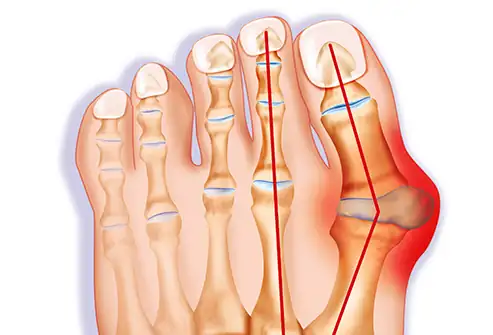
Illustration of a bunion: the big toe angled towards the second toe

Bunions and overlapping toes

A bunion (hallux valgus) is when the first metatarsal turns inward and the big toe angles outward. It can make the joint painful to move.

Hallux valgus is the most common forefoot deformity, with an estimated prevalence of around 30%. It causes symptoms on the inner edge of the foot, the sole and the small toes.

Non-operative treatment may ease symptoms but does not correct the deformity of the big toe.

How we help

  • Toe separator / toe stopper built into the insole
  • Cushioned pads and insoles, or MCR/MCP footwear, to protect the bunion from irritation
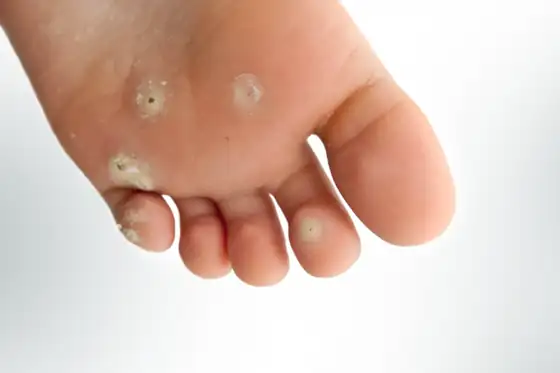
Corns on the sole of a foot under the toes

Corns and calluses

Hard, thickened areas of skin that form from rubbing, friction or pressure. Corns usually appear on the tops and sides of the toes; plantar calluses form on the sole.

A hard corn is a small patch of thickened, dead skin with a small plug in the centre. A soft corn is thinner, whitish and rubbery, and usually forms between the toes. Seed corns are clusters of tiny corns that can be very tender on weight-bearing parts of the foot.

Foot deformities and wearing shoes or sandals without socks raise the risk. The best prevention is shoes that fit well — avoid tight, narrow-toed shoes and heels that push pressure onto the toes.

How we help

  • Custom-made off-loading insoles reduce pressure on problem areas, ease pain and help faster healing
  • Most corns and calluses fade once the friction or pressure stops — consult a doctor if they persist
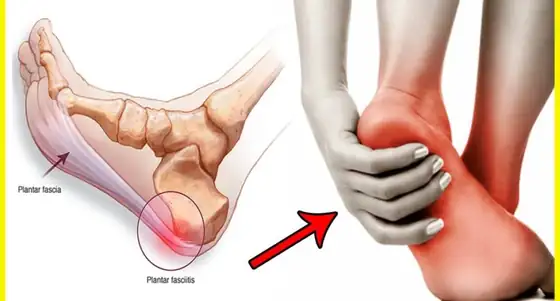
Diagram of the plantar fascia with heel pain highlighted

Plantar fasciitis

Inflammation of the plantar fascia — the band of tissue that connects the heel bone to the toes and supports the arch. One of the most common causes of heel pain.

It usually causes a stabbing pain with your first steps in the morning. The pain eases as you move, but can return after long periods of standing or after rising from sitting.

There are more than 10 million cases a year in India. Treatments include physiotherapy, stretching exercises, shoe inserts, pain relievers, steroid injections and surgery.

How we help

  • Custom insoles and shoe inserts
  • High Ankle Boot — a sustained stretch to the plantar fascia
  • MCR/MCP footwear for cushioning
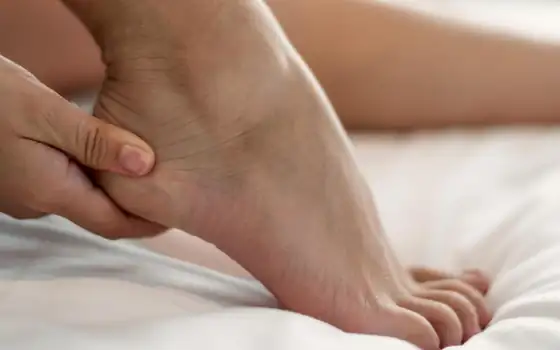
A person holding their heel

Heel pain

Pain under the heel (often plantar fasciitis) or just behind it (Achilles tendinitis). It is usually mild and rarely a health threat, but it can become long-term.

Most heel pain has a mechanical cause. It often comes on gradually and is frequently triggered by flat footwear such as flip-flops, which can stretch the plantar fascia until it becomes swollen.

Other causes include heel bursitis, heel bumps, tarsal tunnel syndrome, chronic inflammation of the heel pad, stress fractures, Sever’s disease and Achilles tendinosis.

Home care — rest, an ice pack for about 15 minutes, proper-fitting supportive footwear and foot supports — is often enough. Anti-inflammatory medicine should only be taken after consulting a doctor.

How we help

  • Wedges, heel cups and insoles to relieve symptoms
  • Supportive, properly fitted footwear
  • High Ankle Boot for heel pain with Achilles tendonitis
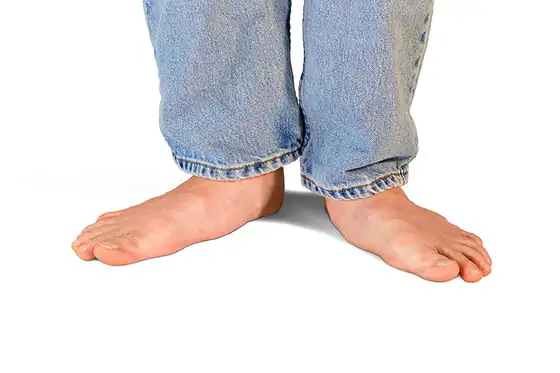
Two bare feet standing flat on the floor

Flat feet

People with flat feet or fallen arches have a very low arch or none at all. Their feet may roll inward when standing or walking (over-pronation).

Many people have no symptoms. Others feel pain in the feet, knees, hips or lower back, or stiffness in one or both feet, and their shoes may wear unevenly.

Causes include genetics, weak arches, injury, arthritis, damage to the posterior tibial tendon, some nerve and muscle conditions, and tarsal coalition. Flat feet are more likely with obesity, diabetes, pregnancy and age.

Children often look flat-footed while their feet are still forming — the arch usually appears with time.

How we help

  • Customised insoles with arch support to correct the deformity and relieve pain — used continuously in adults
  • Arch support for children, before bones and tendons become rigid
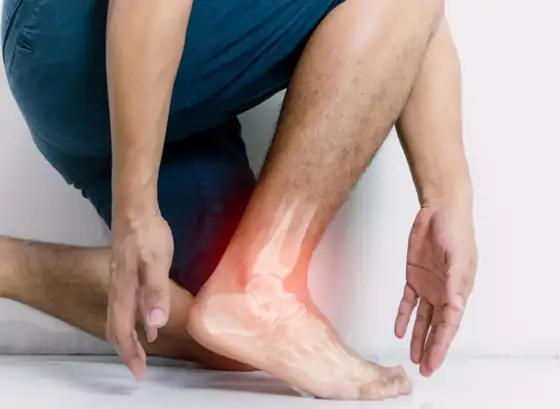
A person holding a painful ankle

Ankle pain

Pain or discomfort in the ankle, from an injury such as a sprain or a condition such as arthritis. Sprains make up about 85 percent of ankle injuries.

For immediate home care, follow RICE: rest, ice (about 20 minutes at a time), compression with an elastic bandage, and elevation above heart level.

Once the pain subsides, gentle ankle circles help restore range of motion. Arthritis-related ankle pain can be managed with activity, stretching and a healthy weight; take pain relievers only after consulting a doctor.

How we help

  • High Ankle Boot to stop improper ankle movement and keep the joint stable
  • Lateral / medial wedge insoles
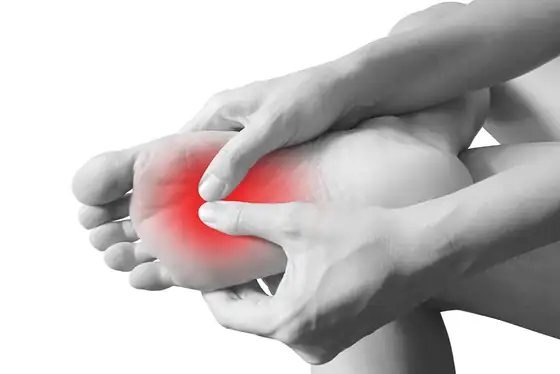
Hands pressing on the ball of a painful foot

Forefoot pain

Pain in the ball of the foot, which carries a heavy load at the toe-off stage of walking.

Causes include long hours on your feet, poorly fitting shoes and trauma. Forefoot pain that does not improve with a reasonable period of conservative care should be checked by a podiatrist or orthopedist.

How we help

  • Insoles and footwear that reduce pressure on the forefoot
  • Metatarsal bar / forefoot rocker
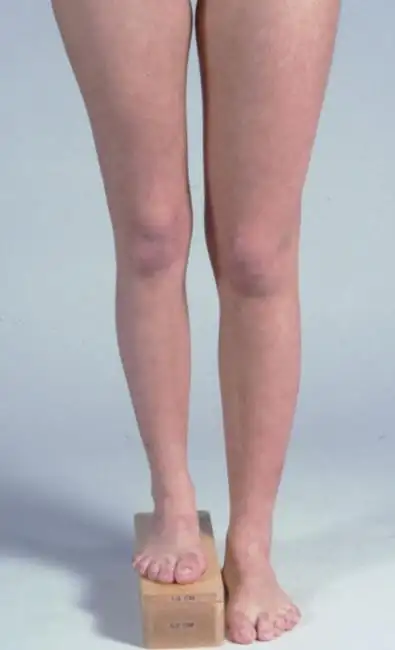
A person standing with one foot raised on a block to level their legs

Leg length difference

Legs of different lengths — present from birth, or caused over time by injury, a bone infection or bone disease. A large difference can cause a limp.

Differences of 3.5 to 4 percent of total leg length (about 4 cm in an average adult) can cause limping and tiredness, because walking takes more effort.

For small differences (under an inch) with no deformity, treatment is usually non-surgical: observation in growing children, or a shoe lift. For surgical correction, consult a doctor.

How we help

  • Correction insoles for a range of differences — they fit neatly inside the shoe and are not easily noticed
  • Shoe lifts fitted inside or outside the shoe
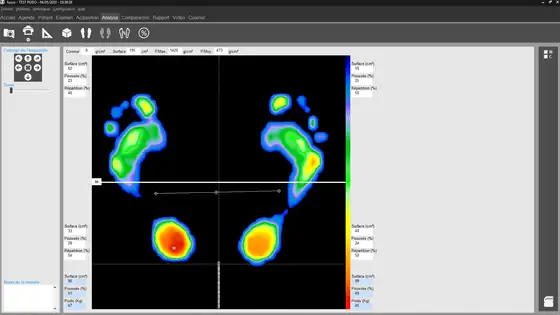
Plantar-pressure map highlighting high-pressure areas of both feet

Diabetic foot

Long-term high blood sugar can damage nerves (neuropathy) and blood flow (peripheral vascular disease) in the feet. Up to 10% of people with diabetes develop foot ulcers.

With neuropathy you may not feel heat, cold or pain, so a cut can go unnoticed and become infected. With poor blood flow, sores take longer to heal.

With good circulation and care, an ulcer can heal in three to six weeks; deeper ulcers may take 12 to 20 weeks.

Daily foot care matters: check for cuts every day, avoid pointed shoes and heating pads, wash in lukewarm water (32–35°C), dry well with a soft cloth, moisturise, and keep blood glucose in your target range.

How we help

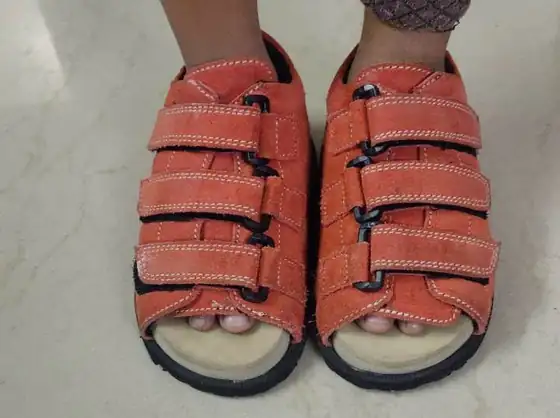
  • MCR/MCP footwear and diabetic shoes with a wide toe, padded collar and heel counter
  • Footwear with anti-bacterial, anti-fungal lining and no sharp corners
  • Customised insoles with arch support, and off-loading for ulcer-prone areas
  • Wound Care Shoe with the four-layer insole system

Visit our store in Chrompet

Visit us to have your feet assessed and see the footwear in person — or message us on WhatsApp with your question.

No. 26, 6th Adam Nagar, Nagelkeni, Chrompet, Chennai, Tamil Nadu 600044